
Engineering With Java: Digest #79
Open Source With AI, JDK 26, Generative AI in Java, AI models in Container and more ...

👋 Java Devs! Welcome to this week’s addition (#79)! I hope you’re all doing great.
This week, we cover essential insights on:

📢 Get actionable Java/Spring Boot insights every week — from practical code tips to real-world use-case based interview questions.
Join 5900+ subscribers and level up your Spring & backend skills with hand-crafted content — no fluff.
First 100 paid subscribers will get the annual membership at $50/year forever( 67 already converted to paid, 33 remaining)

Not convinced? Check out the details of the past work
Before we kick off, this week’s meme 😄

🗒️ Articles Of The Week (10)
Moving beyond Strings in Spring Data : Spring Data traditionally relies on string-based property names in queries, which aren’t compiler-checked and can break silently after refactoring. This blog introduces a move toward type-safe query construction, reducing runtime errors and improving refactor safety. Overall, it pushes Spring Data toward stronger compile-time validation and more robust domain-driven query APIs.
Translating a Website into 8 Languages with AI Agents in One Night : This post describes how the author bruno used a fleet of AI coding agents to internationalize a technical website into eight languages in a single night by first designing an architecture that separated content from structure. With conventions, fallback logic, and overlay-based translations, AI could safely generate language files in parallel, showing that good system design, not just prompts, makes AI automation scale effectively.
Building a Sentiment Analysis Pipeline With Apache Camel and Deep Java Library (DJL) : This tutorial shows how to build a sentiment-analysis pipeline entirely in Java by combining Apache Camel with the Deep Java Library, using a pre-trained DistilBERT model. It demonstrates how Camel routes can ingest files, run NLP inference locally inside the JVM, and handle formatting, retries, and fallbacks — illustrating how ML can become just another integration step in enterprise Java workflows.
A Practical Guide to Building Generative AI in Java : This article introduces Genkit for Java, a framework that simplifies building generative-AI features by letting developers define typed inputs, outputs, and AI “flows” that automatically expose APIs and handle model calls. It shows how this reduces boilerplate around HTTP, JSON parsing, and observability, enabling Java teams to build and deploy GenAI services quickly with production-ready tooling.
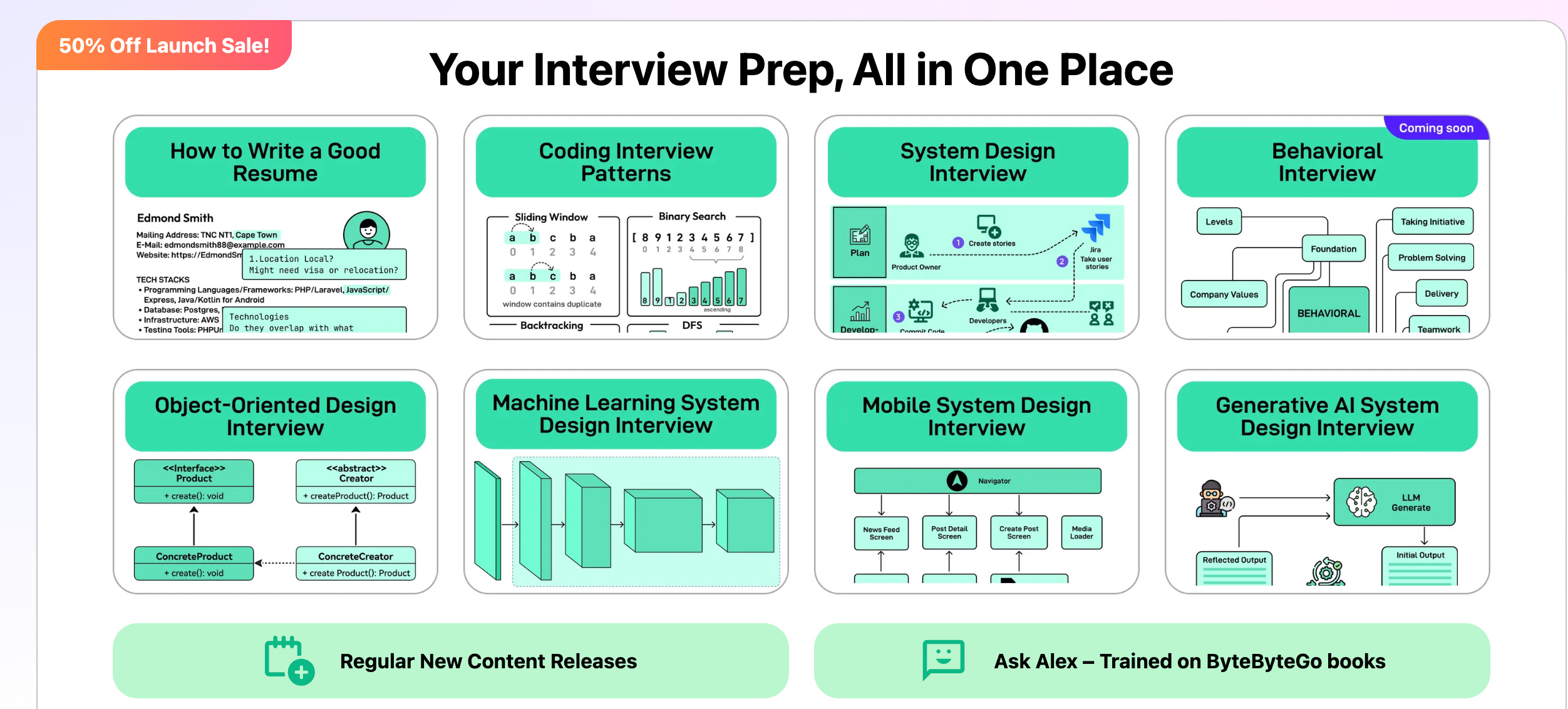
📢 Level up your system design & interview prep with ByteByteGo — expert-curated guides, visual diagrams & real-world patterns from the authors of the top system design books. Start mastering distributed systems the smart way
They are offering 50% discount on annual sale forever
Will AI Kill Open Source? : This post argues that AI won’t kill open source — instead, it will depend on it even more, since AI systems need reliable, tested libraries and shared specifications as building blocks. Rather than replacing OSS, AI could amplify its importance by generating implementations from standards and reusing proven components, reinforcing the collaborative foundations of open-source ecosystems.
JDK 26 G1/Parallel/Serial GC changes : The post reviews JDK 26 garbage-collector updates, highlighting many incremental improvements rather than one big change — including better GC CPU accounting, option cleanups, and reliability fixes. The biggest impact is in G1, where synchronization reductions improve throughput and ongoing work toward automatic heap sizing aims to reduce the need for manual tuning
AI Models in Containers with RamaLama : This article shows how RamaLama lets developers run AI models locally as containerized services and connect them to Java applications, simplifying setup by bundling runtimes, dependencies, and GPU support into OCI images. This container-first approach makes AI inference reproducible, secure, and easy to integrate into existing microservice or Kubernetes workflows.
Data Oriented Programming, Beyond Records : This writeup aims to extend features like pattern matching and records to more general classes. It discusses how records’ strong semantics help derive useful behaviors (like deconstruction/patterns) and explores paths to bring similar concise, structured support to ordinary classes. The focus is on consistent deconstruction, reconstruction, and clearer semantics for data‑centric code beyond raw records.
How to Build a Search Service in Java with MongoDB : This post shows how to build a Java HTTP search service that takes user queries from a front‑end, translates them into a MongoDB aggregation pipeline, and returns search results with pagination, filtering, and metadata like scores. It emphasizes designing a stateless, scalable middle tier that isolates concerns like security and performance while leveraging MongoDB’s $search features behind the scenes.
JFR Analysis Over MCP : This article introduces jfr‑mcp, a tool that turns JFR (Java Flight Recorder) recordings into structured analysis endpoints over a Model Context Protocol (MCP) server so AI agents can systematically query and diagnose JVM performance issues. It exposes both low‑level query tools and higher‑level analysis (e.g., USE Method, thread‑state analysis) so AI can correlate CPU, GC, threads, and I/O to explain bottlenecks.
🔥 Recently Published In-house Blogs (5)
Spring Boot Interview Question - Reducing Cyclomatic Complexity in a Production API
Spring Boot Interview - Adaptive Timeouts for Outbound Call
Java Bug Fix Coding Question - Call to External API
Spring Boot Interview Question - Transactional Trap
Spring Boot Interview Question: Connection Pool Exhaustion
▶️ Videos Of The Week (3)
HTTP/3 in Java 26 : This video dives into HTTP/3 over QUIC, showing how switching from TCP to QUIC improves performance, avoids head‑of‑line blocking, and enables encrypted, evolvable connections, all while keeping the Java API simple and largely transparent for developers
Java DataFrames: The Missing Tool in Your Data-Oriented Toolkit : This talk explores data-oriented programming in Java, showing how immutable records, streams, and data frames enable clean, high-level manipulation of large datasets without complex object-oriented hierarchies. Using examples like a 1 billion-row temperature dataset, it compares Java frameworks (DataFrame, TableSaw, Kotlin DataFrame) against Python pandas, highlighting readability, expressiveness, and efficient aggregation/processing on the JVM.
Build a Production-Ready Salon Booking App : This tutorial shows how to build a production‑ready salon booking application using Spring Boot for the backend, React for the frontend, and Docker for containerization. It walks through microservices architecture, API design, authentication, persistent storage, and deployment best practices, helping full‑stack developers understand how to assemble all these pieces into a real‑world project.
🧑💻 Jobs Of The Week (58)
Thats all for this week! Thanks for reading this far. If you liked it please share with your network.
Subscribe | Sponsor us | LinkedIn | Twitter
Happy Coding 🚀
Suraj