
Java Interview Question - Why you should not use static initializers?
Answering Popular Java Question

Static initializers (static { ... }) are blocks of code that run once when the class is loaded. While they can be convenient for a complex static setup, they come with several drawbacks:
Class Loading Issues:
Static blocks execute when the class is loaded. If they throw exceptions, the class may fail to load, leading to ExceptionInInitializerError at runtime. This can be hard to debug.
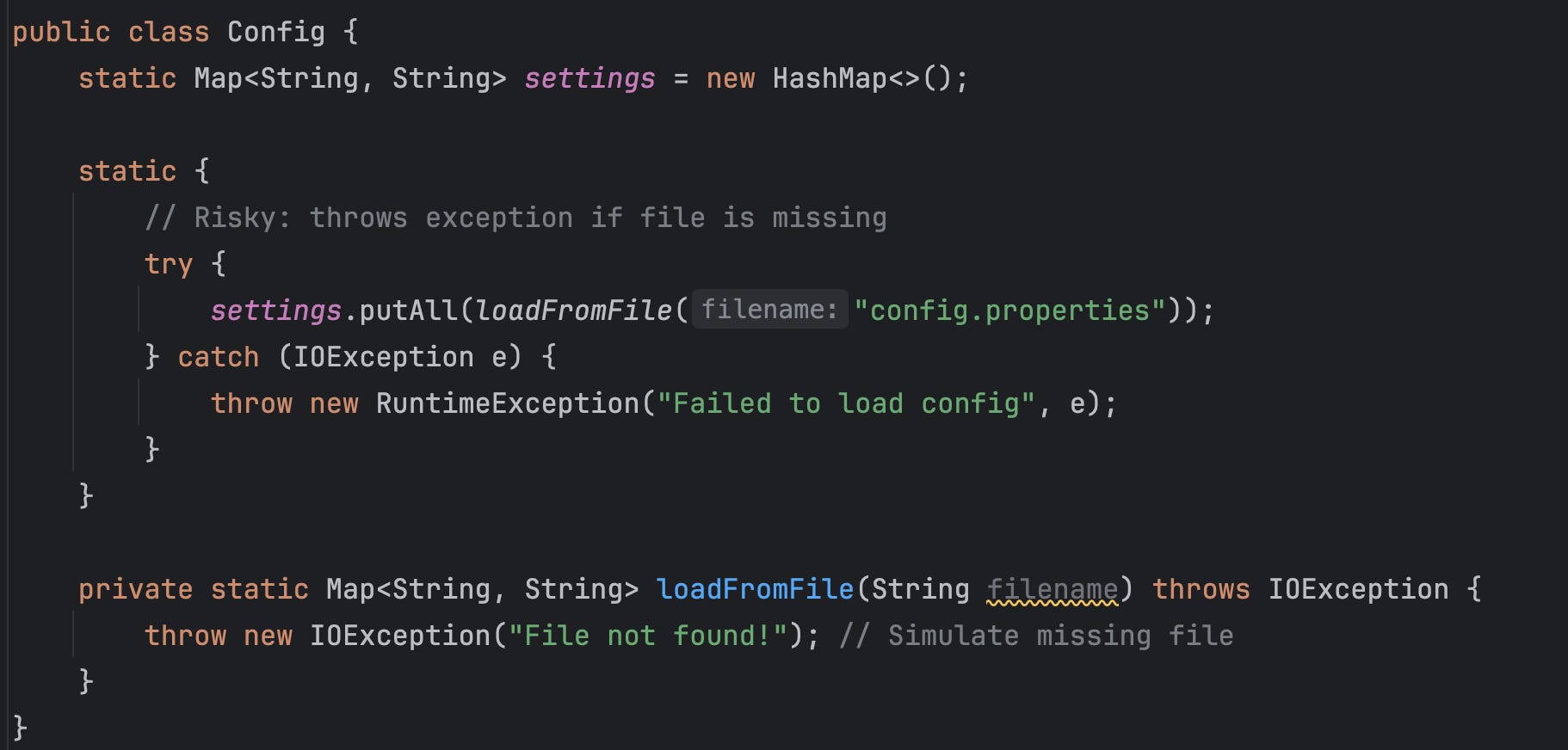

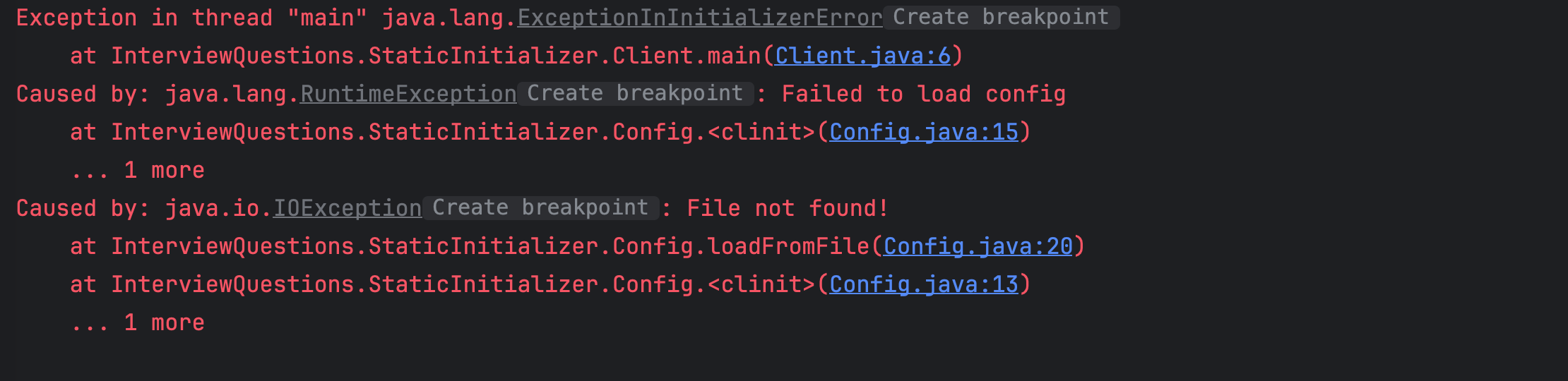
Any class that depends on Config will fail too. This can bring down the application unexpectedly.
Hidden Side Effects / Unexpected Execution
Static blocks run automatically, even if we don’t use the class explicitly.
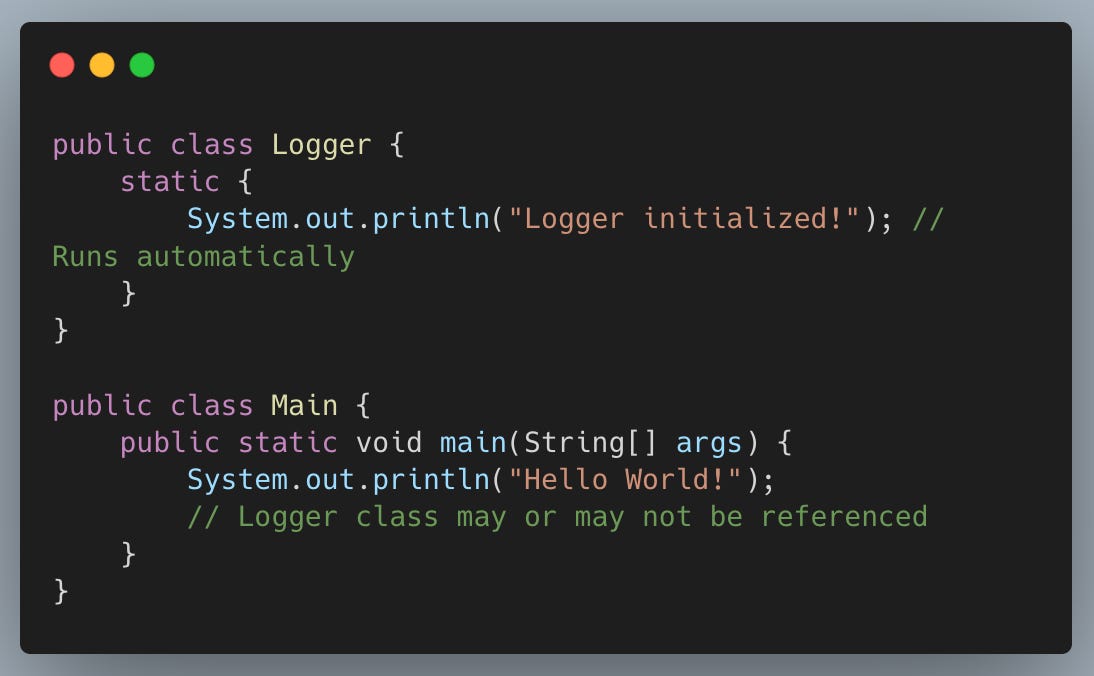
Output:
Hello World!Even if Logger is never used, its static block may execute when JVM loads the class.
Difficult to control execution order
If multiple classes have static initializers that depend on each other, order of class loading matters, which can be tricky.
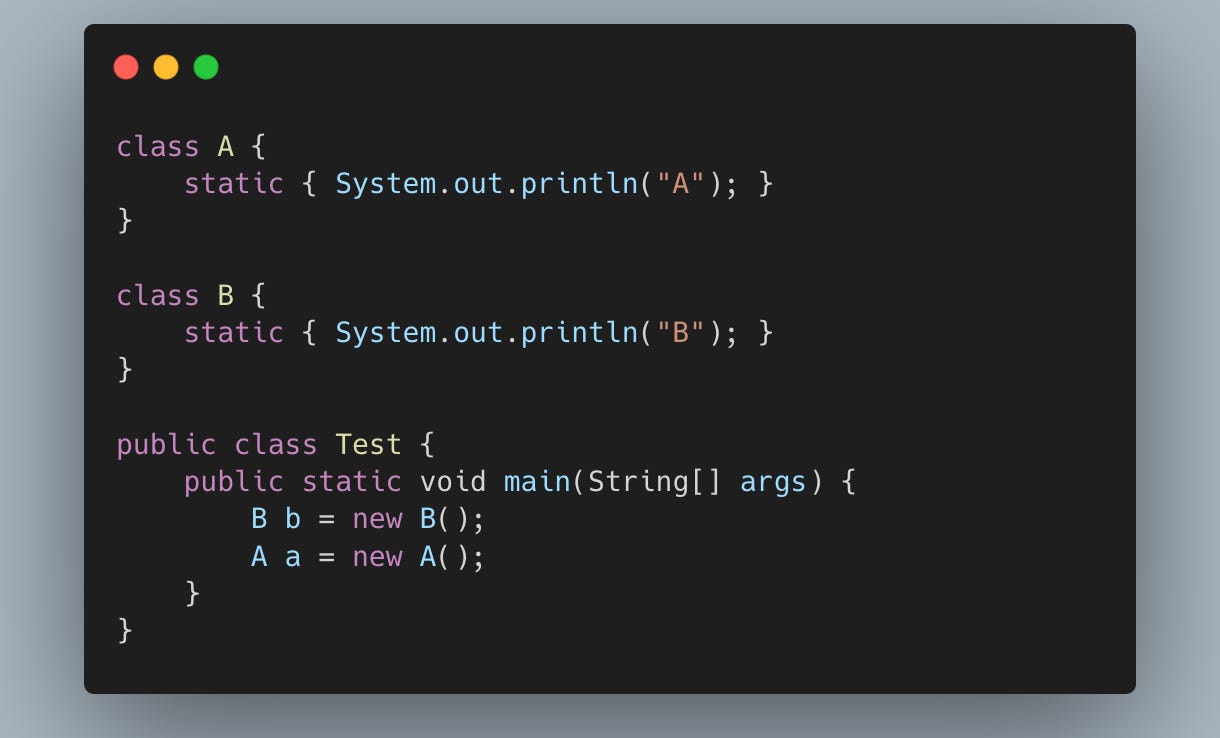
If B depends on A internally, we can get subtle bugs because static blocks execute in the order classes are loaded, not the order we instantiate objects.
Safer Alternatives
Use lazy initialization or constructor-based initialization:
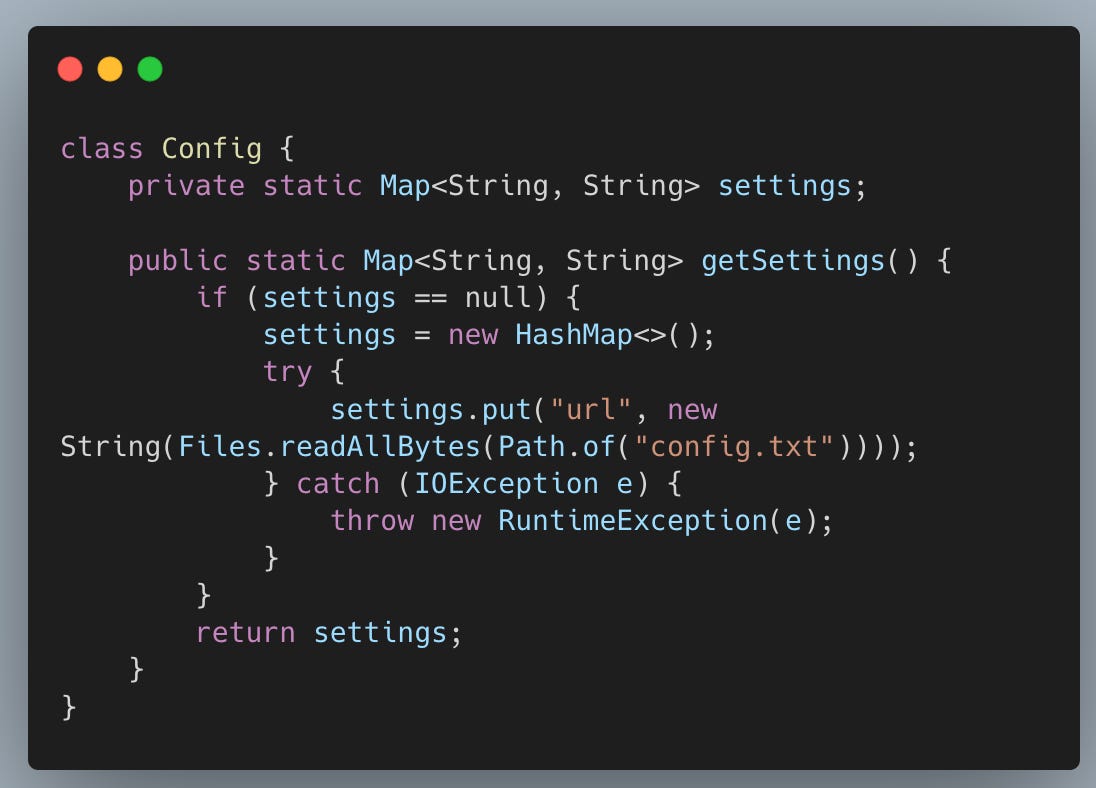
Initialization happens only when needed.
Easier to test and handle exceptions gracefully.
No startup crash if the class is loaded but not used.
📢 Get actionable Java/Spring Boot insights every week — from practical code tips to real-world use-case based interview questions.
Join 5000+ subscribers and level up your Spring & backend skills with hand-crafted content — no fluff.
First 100 paid subscribers will get the annual membership at $50/year ( 60 already converted to paid, 40 remaining )

Not convinced? Check out the details of the past work
📚 Helpful Resources (6)